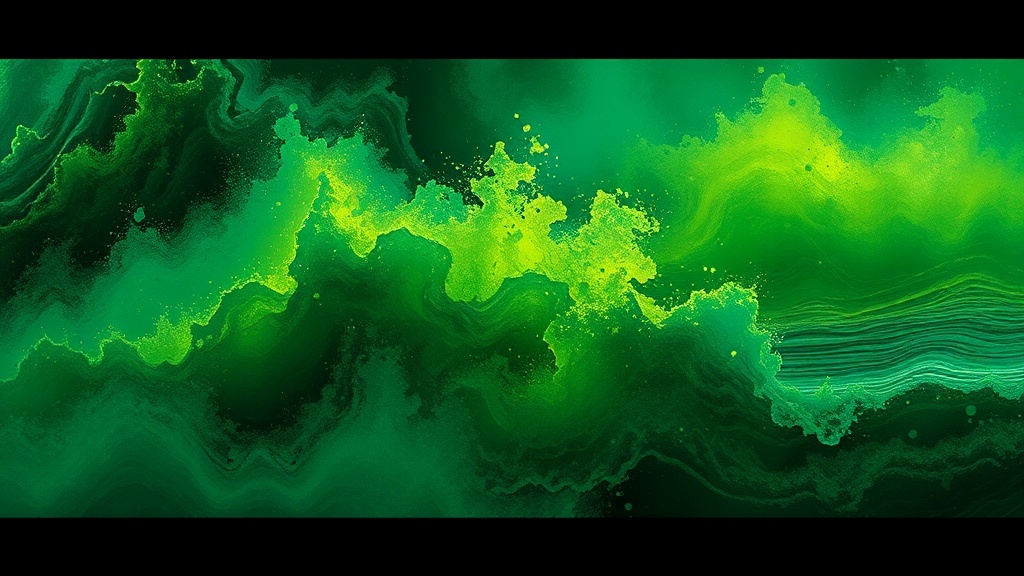
Beyond the Single Brush: Developing Depth Through Layered Textures

Why One Tool Isn't Enough for Visual Depth
Many people think that a high-quality brush or a single expensive pigment is what makes a painting look professional. They believe that if they just find the right tool, the texture will follow. This is a misconception. Real depth doesn't come from the tool itself, but from the way different materials react to one another. If you only use a flat brush, your work will likely stay flat. You need to understand how light hits physical ridges, shadows cast by thick paint, and the subtle variations of dry vs. wet application.
This post explores how to move past basic strokes and start building complex surfaces. We're looking at how to combine unexpected materials to create a sense of three-dimensional space on a two-dimensional surface. It’s about the friction between the medium and the substrate.
What Are the Best Ways to Add Texture to Acrylic Painting?
Acrylics are a dream for texture because they dry relatively fast and can be manipulated while they're still tacky. However, if you only use the paint straight from the tube, you'll often find your work looks a bit thin or plastic-like. To fix this, you have to introduce non-traditional elements. You can use modeling pastes, sand, or even small amounts of fabric to change the way the paint sits on the canvas.
- Impasto Techniques: This involves using very thick applications of paint. Instead of a standard brush, try a palette knife. The knife allows you to lay down heavy "peaks" of paint that catch the light from different angles.
- Additive Textures: Mix in fine sand or even coffee grounds (once dry) to create a gritty, organic feel. This works well for landscape studies where you want to represent earth or stone.
- Layering Glazes: Once a thick layer has dried, apply a very thin, transparent wash over it. This creates a sense of depth where the viewer sees the texture through a veil of color.
For those interested in the chemistry of how pigments interact with different mediums, the Blanchard Color archives offer some great technical insights into pigment behavior. Understanding how a medium flows can change your entire approach to a piece.
Can You Use Found Objects in Fine Art?
The answer is a resounding yes. In fact, some of the most compelling contemporary works rely on the tension between traditional painting and found objects. This isn't about making a collage; it's about integrating the object into the medium itself. When you incorporate a piece of textured cardboard or a scrap of torn linen, you're introducing a history and a physical presence that a brush simply can't replicate.
Think about the edges of your shapes. Instead of a clean line, what happens if you use a piece of torn paper as a stencil? The irregular, frayed edge creates a natural, organic feeling that feels much more "alive" than a perfectly straight line. It breaks the predictability of the composition. You might find that a piece of old lace, when pressed into wet paint, leaves a delicate, ghostly pattern that adds a layer of storytelling to your work.
"Texture is the bridge between the eye and the hand. It is where the viewer's imagination begins to touch the physical reality of the work."
If you're looking for inspiration on how artists use physical space and material, the Museum of Modern Art archives are an incredible resource for seeing how material-driven art has evolved over the decades.
How Do I Prevent Texture from Looking Messy?
There is a fine line between intentional texture and a messy surface. A common mistake is adding too much texture everywhere. If every square inch of your canvas is heavy with paste or grit, the viewer's eye has nowhere to rest. You need to create a hierarchy of focus. A well-composed piece usually has areas of high texture (the focal points) and areas of relative smoothness (the negative space).
Try practicing the "push and pull" method. This means intentionally leaving some areas flat to make the textured areas pop. If you're working with a heavy impasto, make sure your background or your peripheral elements are more controlled. This contrast is what gives the piece a sense of professional polish. It shows the viewer that the texture was a deliberate choice, not an accident.
Another way to manage this is through color. Use a more muted, flat color in your textured areas, and a more vibrant, smooth application in your focal points. This creates a visual tension that keeps people looking. It's a subtle way to guide the eye without being heavy-handed. Often, the most effective way to add depth is to remove something rather than add it—perhaps by scraping away a layer of wet paint to reveal the texture underneath.
Remember, the goal isn't just to make a bumpy surface. The goal is to use that bump to tell a story or evoke a feeling. Whether it's the roughness of a mountain or the softness of a cloud, the texture should always serve the subject matter.