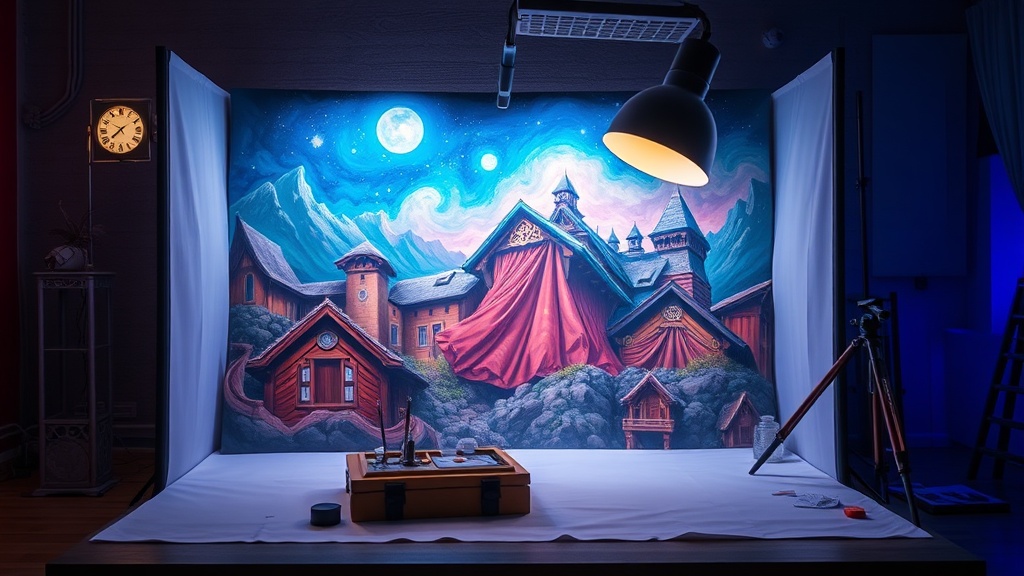
How to Build a Lightbox That Makes Your Artwork Photograph Flawlessly

Why Do My Artwork Photos Never Look Like the Real Thing?
You've finished a piece you're proud of—spent hours layering color, refining details, getting everything just right. Then you snap a photo with your phone and... the colors look dull, shadows pool in odd places, and that subtle gradient you worked so hard on disappears entirely. Sound familiar? The problem isn't your camera or your skills as a photographer. It's the light.
Professional artists and crafters know that consistent, shadow-free documentation makes the difference between work that sells and work that sits unnoticed. Galleries, online shops, and social media feeds all demand clean, accurate images. But renting a studio setup or buying a commercial photo lightbox can cost hundreds of dollars. Here's the good news: you can build a professional-quality lightbox for under $30 using materials from any hardware store—and it'll fold flat for storage when you're done.
What Materials Do I Actually Need?
Before you head to the store, gather your supply list. The beauty of this project is its simplicity—you probably own some of these items already:
- Cardboard box—approximately 18" x 18" x 18" (a medium moving box works perfectly). The size depends on what you typically create; painters working on 16" x 20" canvases should scale up accordingly.
- White poster board—two sheets minimum, matte finish preferred. Glossy surfaces create hot spots and reflections you'll regret later.
- Tissue paper or white vellum—tracing paper works in a pinch. You'll need enough to cover three sides of your box.
- LED daylight bulbs (5000K-5500K)—two clamp lights with 60-watt equivalent bulbs. The color temperature matters enormously here; warm household bulbs (2700K) cast yellow tones that distort your colors.
- Box cutter and straightedge—a metal ruler prevents wobbly cuts.
- Masking tape and glue stick—for securing the backdrop and diffusers.
That's it. No specialty tools, no expensive equipment. The total cost runs about $25-35 depending on what you already have at home. Compare that to commercial options starting at $80 for flimsy fabric versions, and you'll understand why most working artists build their own.
How Do I Assemble the Box for Perfect, Even Lighting?
Start by preparing your cardboard box. Turn it so the flaps face upward—that's your top. You'll be cutting windows in three sides: the left, right, and top panels. Leave the back and bottom intact.
Mark rectangular windows on each of those three sides, leaving a 2-inch border around all edges. These borders maintain structural integrity. Cut carefully with your box cutter, keeping lines straight. Don't worry about rough edges; they'll be covered.
Now tape tissue paper over each window from the outside. This creates diffusion panels that scatter light evenly. Thick tissue (the kind used for wrapping gifts) works better than thin; you want light to spread without losing too much brightness. If you can read text through the tissue held at arm's length, it's about right.
For the backdrop, cut your white poster board to width and tape one end to the top interior of the box (inside the back edge). Let it curve gently down the back and across the bottom without creasing. This seamless curve eliminates corners and shadows—a technique called an "infinity curve" in studio photography. Secure the bottom with tape, pulling it taut so the surface stays smooth.
Where Should I Position the Lights?
Here's where most DIY lightbox tutorials fail—they don't explain lighting angles. Position your two clamp lights at roughly 45-degree angles to the left and right diffusion windows, about 12-18 inches away. This dual-side setup cancels shadows by illuminating your work from opposite directions simultaneously.
The top window serves a different purpose. It provides fill light that softens any remaining shadows and helps capture dimensional textures—critical for showing brushstrokes, impasto, or woven fiber art. If you own a third light, point it downward through the top panel. Otherwise, position your setup near a window (but not in direct sunlight) for natural fill.
Test your setup by placing a simple object inside—an egg works well because of its subtle form and matte surface. Take a photo. If you see harsh shadows on one side, adjust your lights closer to equal distances from the box. If highlights blow out (appear pure white with no detail), move lights back or add another layer of diffusion tissue.
How Can I Take Professional-Quality Photos With My Phone?
The lightbox does most of the work, but technique matters. First, disable your flash—artificial on-camera flash creates hotspots and destroys the even lighting you've carefully constructed. Use your phone's "pro" or manual mode if available, setting white balance to "daylight" or around 5500K.
Hold your phone parallel to the artwork surface. Tilted angles distort perspective and make square paintings look trapezoidal. Many phones have grid overlays in camera settings—use them to keep edges aligned. Shoot slightly zoomed in (avoid the wide-angle lens if your phone has multiple lenses) to prevent edge distortion.
Tap to focus on the center of your artwork, then slightly reduce exposure before shooting. It's easier to brighten a slightly dark image than recover blown highlights. Take multiple shots—slight hand movements between frames help you select the sharpest result later.
For editing, avoid aggressive filters. Adjust brightness, contrast, and white balance only until the image matches what you see in person. Apps like Snapseed or Lightroom Mobile offer selective adjustments that let you correct unevenness without affecting the whole image. Save your final image at maximum resolution—Instagram and other platforms compress aggressively, so starting with more data preserves quality.
What About Larger or Three-Dimensional Work?
The basic box works beautifully for flat art, crafts, and small objects. But sculptural pieces, large paintings, or textiles need different approaches. For oversized work, the same principles apply—just scale up. Replace the cardboard box with a PVC frame draped in white fabric, or use two white foam boards as a corner setup with separate diffusion panels on stands.
For dimensional pieces like ceramics or jewelry, rotate your lights lower—around 30 degrees rather than 45—to emphasize form through subtle shadow. The goal shifts from shadow elimination to shadow control. You want enough dimension to show shape without dark areas that hide detail.
Reflectors help enormously here. A simple piece of white foam board opposite your main light source bounces fill light into shadow areas. For metallic or glossy surfaces, position lights higher and use black cards (pieces of black poster board) to block reflections of the lights themselves appearing as white spots in shiny surfaces.
Maintaining your lightbox extends its life considerably. Store it flat or gently folded—never crush it under heavy objects. Replace tissue paper annually; it yellows over time and shifts your color accuracy. Clean the backdrop surface with a soft cloth when dusty, and replace poster board when it gets scuffed or stained.
"Good documentation is the difference between art that sells and art that sits in storage. Your lightbox is as important as any brush in your studio."
When Should I Consider Upgrading to Professional Equipment?
DIY solutions serve most artists perfectly well for years. However, certain situations warrant investment. If you're shooting hundreds of pieces monthly for e-commerce, the time saved with a collapsible professional lightbox (which sets up in seconds versus minutes) pays for itself. Similarly, if you work primarily with reflective metals, glass, or highly glossy resins, specialized lighting setups with polarizing filters solve problems that cardboard and tissue cannot.
For everyone else—hobbyists selling occasionally on Etsy, painters building Instagram followings, crafters documenting portfolios—this homemade setup produces images indistinguishable from expensive alternatives. The key isn't the equipment cost; it's understanding how light behaves and controlling it deliberately.
Your artwork deserves to be seen clearly. Shadows, color casts, and uneven lighting misrepresent what you've created and undersell your skill. With an afternoon's work and minimal expense, you eliminate these problems permanently. Start building your lightbox today—your next piece will thank you when it photographs exactly as you intended.