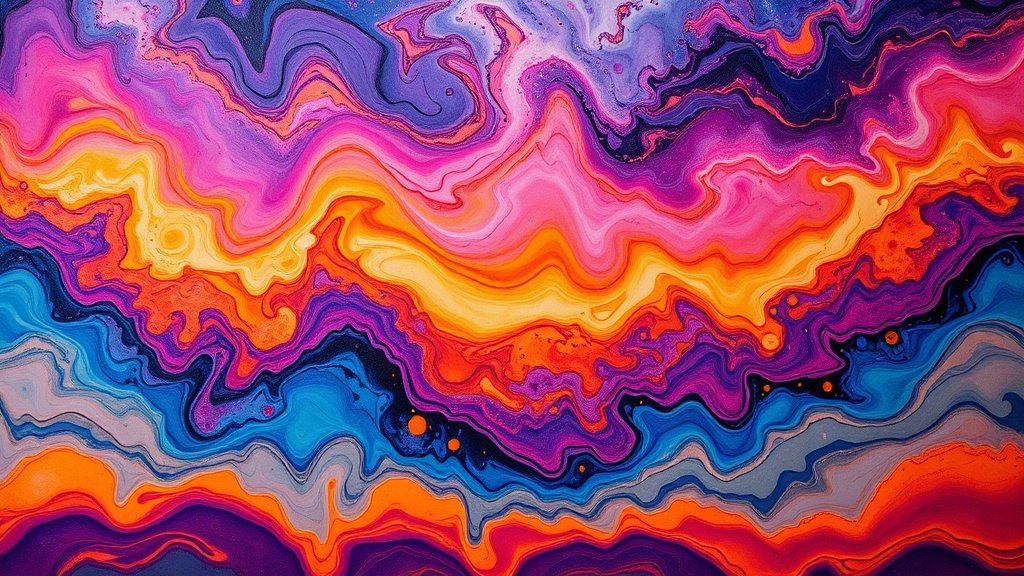
How to Create Stunning Acrylic Pour Paintings: A Complete Beginner's Guide
Acrylic pour painting transforms ordinary paint into mesmerizing, fluid artwork through simple pouring techniques—no brushes required. This guide covers everything from selecting supplies and mixing paint to mastering popular techniques like the flip cup and Dutch pour. Whether you're looking to create wall art for your home, start a new hobby, or eventually sell pieces at Portland's Saturday Market, these fundamentals will get you pouring with confidence.
What supplies do you need to start acrylic pouring?
You'll need paint, a pouring medium, canvases, and a few basic tools. Here's the thing—quality matters more than quantity when starting out.
Acrylic paints: Stick with fluid or soft body acrylics. Golden High Flow and Liquitex Soft Body offer excellent pigmentation without requiring excessive thinning. Avoid heavy body paints initially—they need too much medium to flow properly.
Pouring medium: This thins paint for pouring while maintaining color integrity. Liquitex Professional Pouring Medium remains the industry standard. Floetrol (a paint conditioner from hardware stores) offers a budget-friendly alternative that many professionals actually prefer for its cell-creating properties.
Canvases: Stretched canvases work, but canvas boards won't warp under wet paint. Start with 8x10 or 11x14 inch sizes—large enough to see patterns develop, small enough to manage.
key tools: Plastic cups (Dixie or Solo cups), wooden craft sticks for stirring, a level surface protector (plastic sheeting or a dedicated pour tray), and gloves. A kitchen torch or heat gun helps eliminate bubbles and creates cells.
Silicone: A few drops of silicone oil (or treadmill belt lubricant) creates those coveted circular cells. Use sparingly—a little goes surprisingly far.
| Supply | Budget Option | Professional Option | Approximate Cost |
|---|---|---|---|
| Paint (set of 6 colors) | Apple Barrel acrylics | Golden High Flow | $8-15 / $40-60 |
| Pouring Medium (8 oz) | Floetrol (hardware store) | Liquitex Professional | $8 / $15-20 |
| Canvases (5-pack) | Artist's Loft (Michaels) | Fredrix Pro Series | $10 / $25-35 |
| Silicone for cells | 100% silicone treadmill lubricant | Blaster silicone spray | $10 / $8 |
How do you mix paint for acrylic pouring?
Mix paint to a consistency similar to warm honey—thin enough to flow, thick enough to maintain color separation.
Start with a 1:1 ratio of paint to pouring medium. That's your baseline. Some colors (whites, metallics) need more medium. Others (blues, blacks) might need less. The catch? Every brand behaves differently.
Pour your paint into a cup first. Add the medium. Stir slowly—aggressive mixing creates bubbles that become craters in your finished piece. Scrape the cup sides. Check consistency by lifting the stir stick. The paint should stream off in a continuous ribbon that disappears into the cup surface within 2-3 seconds.
Too thick? Add medium a teaspoon at a time. Too thin? More paint. Document your ratios—seriously, write them down. Nothing's more frustrating than nailing a color mix, then forgetting the proportions.
Add water only as a last resort. It weakens paint film integrity and can cause cracking. If you must use water, keep it under 10% of your total mixture.
For cells, add 2-3 drops of silicone oil per cup. Stir once—just once—then stop. Over-mixing silicone makes it ineffective.
What are the best acrylic pour techniques for beginners?
The dirty pour, flip cup, and swipe techniques offer the best combination of visual impact and beginner-friendly execution.
The Dirty Pour: Layer different colored paints into a single cup. Don't stir them together—let them stack. Pour slowly across your canvas, tilting to spread. Colors interact organically, creating feathered patterns and unexpected blends. This technique rewards patience and punishes over-manipulation.
The Flip Cup: Place your canvas upside down on top of your paint cup. Flip both together (quickly—hesitation causes drips). Let the cup sit for 10-15 seconds so paint releases from the sides. Lift straight up. The paint releases in a dramatic bloom. Tilt your canvas to stretch the pattern. Worth noting: this technique creates the most cells naturally.
The Swipe: Pour a base color across your canvas. Add lines of contrasting colors on top. Take a wet paper towel, dampened sponge, or plastic sheet and swipe across the surface. The base color pushes through the layers, creating cellular patterns reminiscent of ocean waves or nebulae. Liquitex Basics Titanium White works exceptionally well as a swipe color.
The Dutch Pour: Pour a base coat. Blow it out using a hair dryer, heat gun, or straw. Add color lines in the wet base. Blow again, directing airflow to create feathered, smoke-like patterns. This technique demands control—you're literally sculpting with air. Sophie's Studio in Portland offers excellent Dutch pour workshops for hands-on learning.
How long does acrylic pour art take to dry?
Most pieces dry to the touch within 24-48 hours but require 3-7 days for full curing.
Thickness determines drying time. Thin pours (1/8 inch or less) might cure in 48 hours. Thick puddles of paint—common in the flip cup technique—can take a week or more. Temperature and humidity matter enormously. Portland's damp winters extend drying times significantly. A dehumidifier helps. So does patience.
Resist the urge to varnish too early. Trapped moisture causes clouding and eventual delamination. Wait the full week. Test a corner—if it feels cool to the touch, it's still curing.
Once fully dry, seal your work. Pouring creates uneven surfaces that collect dust. Two coats of Golden Polymer Varnish (gloss or matte, your choice) protects without yellowing. Apply with a soft foam brush. Don't over-brush—strokes show.
Why did my acrylic pour crack, and how do you prevent it?
Cracking results from paint drying at different rates—usually from too-thick applications, insufficient medium, or environmental factors.
Prevention starts with consistency. All your paints should be mixed to similar thicknesses. If one color is significantly thicker, it contracts differently as it dries, pulling the surface apart. That said, some cracking can look intentional and organic—artists like Rinske Douna actually exploit controlled cracking for texture.
Temperature swings wreak havoc. Don't pour in direct sunlight or near heat vents. The surface skin dries while underneath stays wet. Eventually, something gives.
If cracks appear while drying, there's no fix. Sand them smooth after full curing, touch up with matching paint, and re-varnish. Or embrace the imperfection—Wabi-sabi aesthetics celebrate exactly this kind of organic irregularity.
Silicone residue also causes problems. Too much oil prevents paint adhesion. After your pour dries, wipe the surface with a mix of water and a drop of dish soap, then rinse clean before varnishing.
Where can you sell acrylic pour paintings locally?
Portland offers multiple venues for selling original fluid art, from weekend markets to coffee shop galleries.
Portland Saturday Market (weekends March-December) accepts applications from local artists. Booth fees run around $45-65 daily. The foot traffic is substantial—expect to explain your technique repeatedly. Bring business cards.
Coffee shop galleries: Many Portland cafés—like Either/Or on Williams Avenue or Red E Café on Killingsworth—rotate local artwork monthly. Contact managers directly. They typically take 20-30% commission but handle all sales processing.
Online presence: Instagram remains the primary platform for visual artists. Document your process with short videos—pours are mesmerizing to watch. TikTok's algorithm favors this content too. Etsy handles the transaction logistics but charges listing and transaction fees.
Pricing guidance: Beginning artists often undercharge. A basic formula: materials cost × 3 + $20-40/hour for your time. An 11×14 canvas with $15 in materials and 2 hours work? Price around $95-135. Don't apologize for your prices. Commission pieces warrant higher rates—custom work demands communication, revisions, and specific color matching.
Acrylic pouring rewards experimentation. Each piece is unrepeatable—that's the point. Start small. Expect failures. Document everything. Within weeks, you'll recognize which color combinations sing and which fall flat. The learning curve is steep but forgiving. Your twentieth pour will look nothing like your first. That's progress you can see.
Steps
- 1
Prepare Your Workspace and Mix Your Paints
- 2
Layer Your Colors in a Cup or Pour Directly
- 3
Pour, Tilt, and Create Your Masterpiece