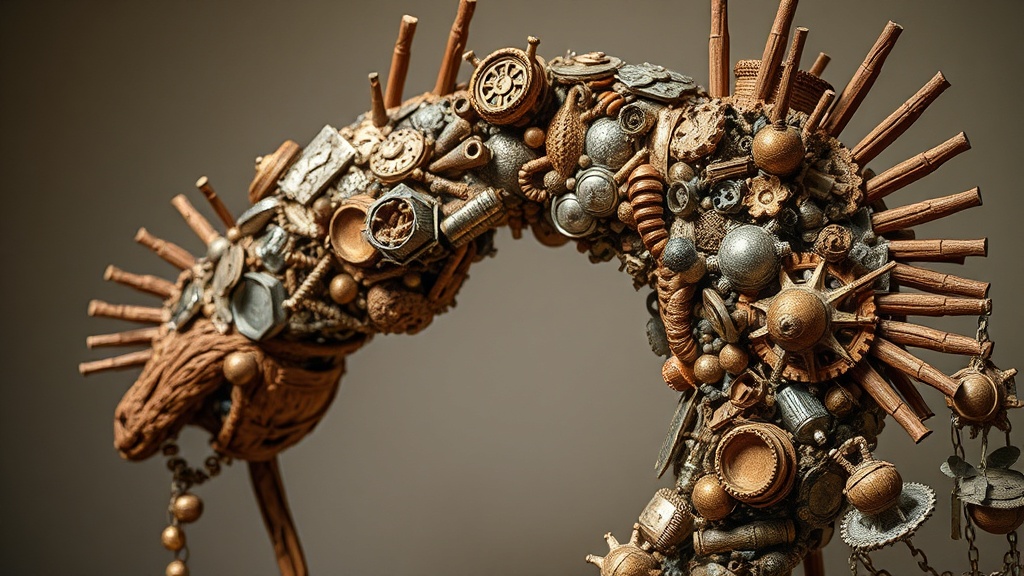
Exploring Texture Through Found Object Sculptures

A single piece of weathered driftwood can possess more visual complexity than a perfectly smooth block of Carrara marble. This post examines how artists use found object sculptures to manipulate tactile perception and surface texture. We'll look at the technical ways to integrate non-traditional materials—like rusted metal, sea glass, or discarded textiles—into structural compositions to create depth and sensory engagement.
Texture isn't just about how something feels under your fingertips; it's about how light interacts with a surface to create a sense of weight and history. When you move away from traditional clay or bronze, you're forced to work with the "built-in" character of your materials. This shifts the artist's role from a creator of form to a curator of existing textures.
What Materials Make the Best Found Object Sculptures?
The best materials for found object sculptures are those that offer high contrast in both physical touch and visual weight. You want a mix of organic and synthetic elements to create a sense of tension in your work.
Organic materials—think weathered wood, stones, or even dried seed pods—provide a sense of time and decay. These pieces often feel "grounded" and heavy. On the flip side, synthetic materials like plastic shards or copper wiring add a modern, jarring edge. The goal is to find a balance where one texture doesn't completely overwhelm the other.
I often look for items that have already undergone a transformation. A piece of rusted iron has already "done the work" of creating a complex, pitted surface. You don't have to mimic that with a tool; the history is already etched into the metal. It’s a way to borrow complexity without spending hours on detail work.
Here are a few categories of materials that work well for different sculptural goals:
- Industrial Scraps: Gears, bolts, and rusted sheet metal provide hard edges and predictable, heavy textures.
- Natural Detritus: Driftwood, river stones, and dried bark offer soft, irregular, and unpredictable surfaces.
- Domestic Artifacts: Broken porcelain, old buttons, or weathered fabric pieces bring a sense of human narrative to the piece.
- Translucent Elements: Sea glass or discarded acrylic pieces allow light to pass through, creating a "glow" that offsets heavier, opaque textures.
If you're interested in how natural pigments interact with different surfaces, you might enjoy reading about building a natural indigo dye studio, which explores how color interacts with organic fibers.
How Do You Create Texture with Found Objects?
You create texture through a process of layering, juxtaposition, and structural assembly. It isn't just about gluing things together; it's about how those elements interact with light and shadow.
One technique is additive layering. This involves building up a base—perhaps a wire armature—and then "dressing" it with smaller, textured pieces. Think of it like a skin. You might use a thick layer of heavy-duty epoxy to bond small bits of sand or crushed glass to a wooden base. This creates a rugged, uneven surface that catches shadows in deep crevices.
Another way is through juxtaposition. This is where you place a very smooth, polished object next to something incredibly jagged. A piece of smooth, sea-washed glass placed against a jagged piece of charred wood creates a visual "pop." The brain notices the transition between the two textures immediately. It’s a way to direct the viewer's eye without using color.
The way you join pieces matters just as much as the pieces themselves. If you use a visible, thick cord to bind two pieces of wood, that cord becomes a texture. If you use a hidden internal wire, the focus stays entirely on the objects. (I personally prefer the visible, rugged look of heavy twine or wire—it adds to the "found" aesthetic.)
When working with heavy metals or wood, I recommend checking the Library of Congress digital collections to see how historical sculptors handled structural integrity in non-traditional forms. It provides a great baseline for what is physically possible with heavy-duty materials.
Comparing Common Assembly Methods
Choosing the right way to connect your objects determines the longevity and the "feel" of the sculpture. A weak connection can ruin the visual flow of a piece.
| Method | Best For... | Texture Result | Difficulty |
|---|---|---|---|
| Wire Wrapping | Organic shapes (sticks, stones) | Linear, rhythmic, and industrial | Low |
| Epoxy/Resin | Small shards, sand, or glass | Seamless, smooth, or encrusted | Medium |
| Mechanical Fastening | Metal scraps, heavy wood | Structural, brutalist, and heavy | High |
| Adhesive (Glue) | Lightweight plastics or fabric | Subtle, often hidden | Low |
What Tools Are Needed for Found Object Sculpture?
The tools you need depend entirely on the weight of your objects and the binding method you choose. You'll likely need a mix of cutting, shaping, and fastening tools.
For working with metal and wood, a standard set of heavy-duty pliers and a cordless drill are non-negotiable. If you're working with smaller, more delicate objects, a precision hobby knife and various types of adhesive (like E6000 or a high-strength epoxy) are more useful. I've found that having a dedicated pair of heavy-duty wire cutters is a massive help when you're dealing with rusted wire or thick copper.
Don't overlook the importance of cleaning your materials. If you're using rusted metal or weathered wood, you'll want to ensure the surface is stable before you start building. A wire brush is a great tool here. It allows you to strip away loose rust or dirt without destroying the underlying texture. It's a bit of a tedious step, but a clean surface means your adhesives will actually hold.
One thing to watch out for is the "weight" of your tools. If you're using a heavy hammer to shape a piece of metal, you're adding a different kind of texture—one of impact. This can be a great way to "distress" a material even further. It's an intentional way to add a sense of wear and tear to a piece that might look too "new."
For those interested in the technical side of material science and how different surfaces react to the environment, the National Institute of Standards and Technology offers incredible-resource-depth on material properties and surface roughness. Understanding these properties can help you predict how your sculpture will age.
When you're building, remember that the "imperfections" are your best friends. A scratch in the metal or a crack in the wood isn't a mistake; it's a feature. It's a piece of data that tells a story about the object's existence before it reached your studio. Embrace the grit. It's what gives the work its soul.