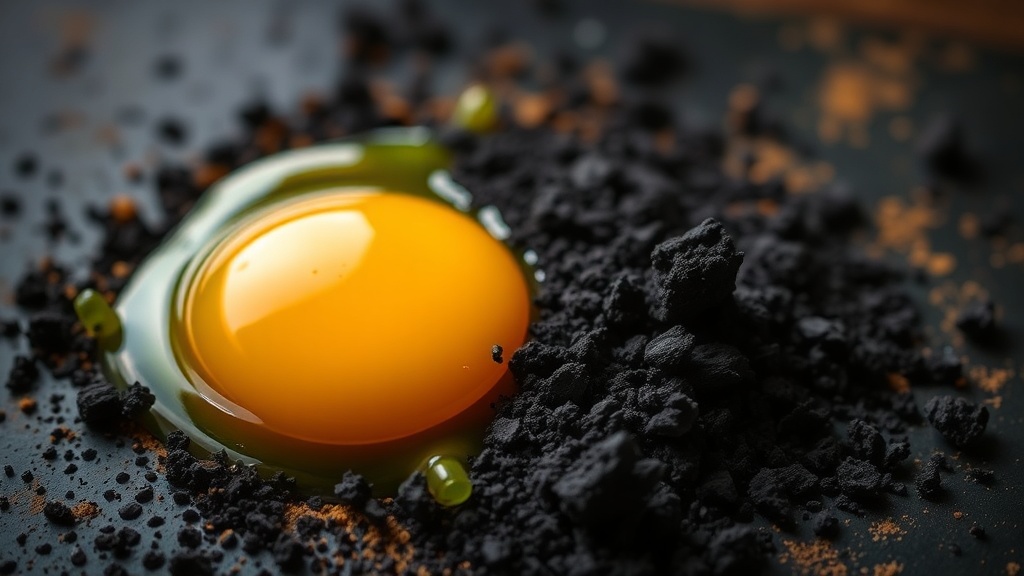
Making Vivid Pigments from Crushed Charcoal and Egg Yolks

Many artists assume that creating high-quality pigments requires expensive synthetic chemicals or specialized laboratory equipment. That's a mistake. You can actually produce professional-grade, lightfast paints using nothing more than burnt wood and a single egg yolk. This guide breaks down the chemical process of tempering tempera paint, the specific grit requirements for charcoal, and the exact ratios needed to ensure your paint doesn't crack or peel once it dries.
The process involves transforming raw, carbon-heavy charcoal into a fine powder and binding it with a lecithin-rich emulsion. It's a method used by Renaissance masters, and it's still one of the most effective ways to achieve a deep, matte black that synthetic tubes often fail to replicate. We're going to look at the science of the binder and the physical preparation of the pigment.
How Do You Make Tempera Paint from Scratch?
To make tempera paint, you must combine a finely ground pigment with an egg yolk emulsion to create a stable, water-soluble binder. Most people try to mix charcoal dust directly with water, but that results in a muddy, unbindable mess. You need the lecithin found in the yolk to act as the bridge between the carbon particles and the liquid.
First, you'll need to prepare your "binder" (the egg yolk). Don't use the whole egg—that's a common error that leads to a greasy, unusable mess. You only want the yolk. The white (albumen) is too watery and lacks the necessary fats to hold the pigment in suspension.
- Separate the Egg: Crack a fresh, room-temperature egg. Carefully separate the yolk from the white. If you get even a speck of white in the yolk, the paint will be too thin.
- The Drying Phase: Place the yolk on a piece of parchment paper or a thin glass plate. Let it sit for about 30 minutes to a minute to allow some of the moisture to evaporate. This thickens the emulsion.
- Grinding the Charcoal: Take your high-quality charcoal (I recommend using willow or vine charcoal) and grind it in a stone mortar and pestle. You need to go beyond "dust"—you want a microscopic powder.
- The Mixing: Add a small amount of the yolk to the charcoal powder. Use the pestle to grind the yolk into the pigment. This isn't just stirring; it's a physical integration of the two substances.
- Thinning: Add drops of distilled water or a tiny bit of white vinegar to reach your desired consistency.
If you've ever experimented with organic materials, you might have looked into creating textures from kitchen staples, but tempera is a different beast entirely. It's not just a texture; it's a permanent, structural medium.
What Type of Charcoal Works Best for Pigment?
The best charcoal for pigment production is a hardwood charcoal or a high-grade vine charcoal that has been pulverized into an extremely fine powder. The goal is to achieve a particle size so small that it doesn't feel "gritty" when you rub it between your fingers. If the particles are too large, the paint will look like sandpaper once it dries.
I've found that willow charcoal works beautifully because it's relatively soft, but for a deeper, more permanent black, a burnt wood charcoal (essentially pure carbon) is superior. It's much more stable and won't react poorly with the organic components of the yolk.
Here is a quick comparison of common carbon-based materials for artists:
| Material | Color Depth | Ease of Grinding | Best Use Case |
|---|---|---|---|
| Vine Charcoal | Medium Gray/Black | Very Easy | Sketching and light washes |
| Hardwood Charcoal | Deep Matte Black | Moderate | Fine art tempera painting |
| Graphite Powder | Metallic Black/Gray | Difficult | Adding sheen to textures |
Note that graphite is much harder to work with for this specific method—it's more "slippery" and doesn't bond with the yolk as readily as pure carbon. If you're interested in how to use different carbon types, check out my post on using old graphite sketches to see how these materials behave under different conditions.
How Long Does Homemade Egg Tempera Last?
Homemade egg tempera has a very short shelf life, typically lasting only a few days to a week if kept in a cool, dark environment. Because you're working with organic matter (the egg), it will eventually spoil and develop an odor. You should only mix what you intend to use for a single session.
Don't try to make a huge batch to store in a jar for months. It's a waste of time. Instead, keep your dry charcoal powder in a sealed container and your egg yolks in the refrigerator. Mix them fresh every time you sit down to paint. This ensures the emulsion is at its peak strength and won't go rancid mid-painting.
One thing to keep in mind—the paint dries incredibly fast. This isn't a slow-drying oil paint. You'll be working in small, controlled strokes. If you try to blend it like a watercolor, you'll end up with a bumpy, uneven surface. Think of it as building up layers of color rather than one big wash.
The color is also incredibly stable once it's dry. Unlike some modern pigments that might fade under UV light, carbon-based charcoal is virtually permanent. Once that yolk dries, it forms a hard, resinous film that holds the pigment in place. It's a tough, durable medium—provided you don't let the egg go bad before you're done.
If you're used to the slow, fluid movement of watercolors, you might find this transition jarring. If you want to see how to handle more fluid, water-based transitions, you might enjoy my guide on mastering wet-on-wet techniques. However, tempera is much more "unforgiving" than watercolor. There is no room for error once the yolk begins to set.
One final tip: if your paint looks too thick or "clumpy," don't just add water. Add a tiny drop of vinegar. The acidity helps break down the proteins in the yolk, making the mixture more fluid and easier to spread across your surface. It's a small trick, but it makes a massive difference in the final texture of your work.