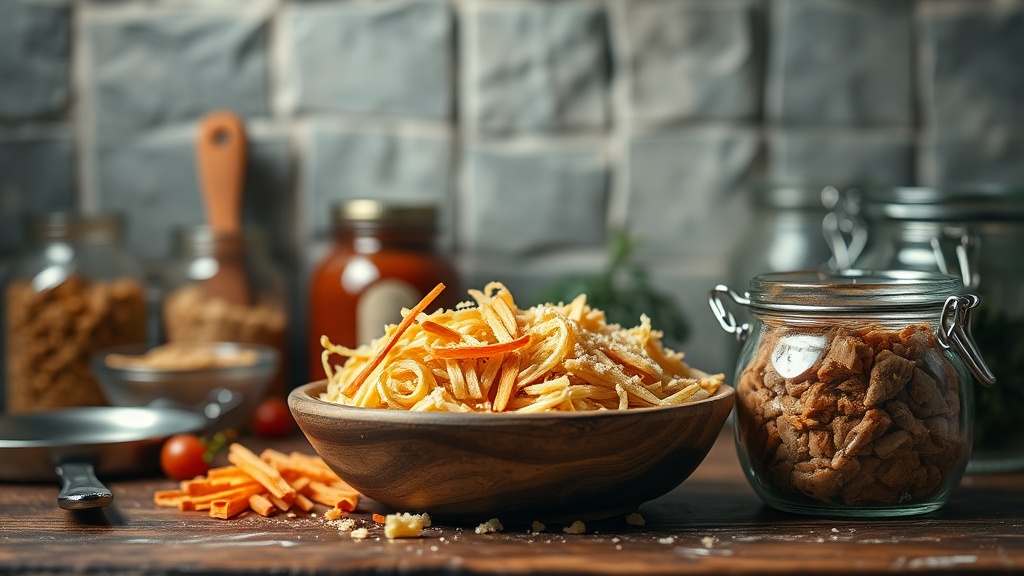
7 Unusual Textures from Kitchen Pantry Staples

Granular Depth with Sea Salt
Smooth Dimensions with Cornstarch
Crackle Effects with Granulated Sugar
Organic Grittiness with Coffee Grounds
Soft Volume with Rice Grains
Glossy Layers with Honey
Matte Finishes with Baking Soda
You’re standing in your kitchen, staring at a box of cornstarch or a jar of cinnamon, and realizing you don't have the specific sculptural medium you need for your current project. This post explores how seven common kitchen staples—ranging from salt to dried pasta—can be transformed into sophisticated textures for mixed media art, painting, and sculpture. Instead of running to an art supply store, you can use these pantry items to add physical depth and unexpected tactile qualities to your work.
What Can You Make With Cornstarch and Water?
Cornstarch mixed with water creates a thick, viscous paste that acts as a natural modeling clay or a heavy-body texture paste. When you mix cornstarch with a small amount of water, you get a substance that can be sculpted or spread thick to create "crackle" effects as it dries. It's a budget-friendly way to build up surface area on a canvas without the high cost of professional modeling pastes.
The key is the ratio. If you want a smooth, thick paste, use a high starch-to-water ratio. If you want a more fluid, pourable texture, thin it out slightly. You can even mix it with a bit of acrylic paint to color the medium as you work. It's a bit messy—wear an apron—but the results are often much more organic than store-bought alternatives.
Pro-Tip: To prevent mold if you're working on a long-term piece, add a tiny drop of clove oil or a pinch of salt to the mixture. This helps preserve the organic material while it dries.
How Do You Use Salt for Watercolor Textures?
Salt creates organic, crystalline patterns in watercolor paintings by absorbing pigment and water from the paper. When you sprinkle salt onto a wet-on-wet watercolor wash, the salt crystals pull the pigment toward them, leaving behind starburst-like shapes and speckled textures. This technique is a staple for artists looking to create celestial effects, snowy landscapes, or even stone-like surfaces.
There are two main ways to use this: a light dusting for subtle speckles or a heavy coating for dramatic, high-contrast textures. I’ve found that using watercolor techniques with salt works best on heavy-weight paper that can handle the moisture. If your paper is too thin, the salt might cause the fibers to buckle or even tear.
- Table Salt: Produces fine, subtle speckles.
- Kosher Salt: Creates larger, more dramatic "blooms" due to the larger crystal size.
- Sea Salt: Offers a middle ground with irregular, organic shapes.
One thing to watch out for: don't wait too long to remove the salt. If the paint is too dry, the salt won't absorb anything; if it's too wet, it might turn into a mushy mess. You want that "sweet spot" where the paint is still glistening but starting to set.
If you enjoy experimenting with pigment and organic materials, you might also enjoy painting with coffee stains and espresso tones to add even more depth to your layers.
Can You Use Flour to Create Sculptural Relief?
Flour acts as a base for a homemade "salt dough" or a heavy paste that can be used for low-relief sculpting on flat surfaces. By mixing flour, salt, and water, you create a malleable medium that can be applied to a substrate to build up 3D shapes. This is a great way to practice exploring texture through found object sculptures without buying expensive polymer clays.
The texture of flour-based dough is incredibly versatile. You can press objects into it to create impressions, or you can use it to build up height on a canvas. Once it dries, it becomes quite hard, though it can be brittle if it's too thin. It's a perfect medium for creating faux-stone or ceramic-like textures in a temporary or experimental capacity.
Texture Comparison: Kitchen Staples
| Pantry Item | Visual Texture | Best Use Case |
|---|---|---|
| Cornstarch | Smooth, thick, matte | Heavy-body impasto-style paste |
| Salt | Crystalline, speckled | Watercolor washes and blooms |
| Flour | Dense, doughy, heavy | Relief sculpture and 3D buildup |
| Coffee Grounds | Gritty, dark, organic | Adding physical grain to paint |
| Sugar | Glittery, translucent | Adding shimmer to acrylics |
How Does Coffee Ground Texture Work in Art?
Coffee grounds add a gritty, granular texture to paint and can also be used as a pigment source. When mixed directly into acrylic or tempera paint, the grounds create a heavy, dark, and organic-looking surface that mimics soil or stone. This is a great way to move beyond the flat surface of a standard canvas.
You can use fresh grounds for a stronger scent and a darker color, or dried grounds if you're worried about moisture levels. I often use coffee grounds to add a sense of "weight" to my landscapes. It adds a physical dimension that paint alone just can't achieve. It’s a bit more visceral than standard art supplies—definitely something to try if you want your work to feel "earthy."
It's worth noting that coffee grounds can sometimes bleed color into your paint over time. If you're working on a long-term piece, you might want to seal the grounds in a clear medium first. This keeps the texture intact without the pigment bleeding into your surrounding colors.
Is Sugar a Good Substitute for Glitter?
Sugar provides a shimmering, crystalline texture that can be used to add light-reflecting properties to your art. When sprinkled over wet acrylic paint or a glue-based medium, sugar creates a faceted, sparkling effect. It's a natural, biodegradable alternative to plastic glitter, making it a better choice for environmentally conscious creators.
The texture is somewhat temporary, though. Unlike high-grade glitter, sugar can dissolve if it gets too wet or if the humidity in your studio is high. It's best used for ephemeral pieces or as a way to experiment with light before committing to a permanent medium. You can use granulated white sugar for a subtle shimmer or coarse sugar for a more dramatic, chunky texture.
If you're looking for more ways to experiment with natural materials, check out my post on creating botanical ink from foraged garden scraps. It shares that same spirit of looking at the world around you as a source of pigment and texture.
How Can Dried Pasta Add Dimension to a Canvas?
Dried pasta serves as a structural element for 3D mixed media, allowing you to build up shapes and architectural patterns. Because pasta comes in various shapes—like penne, fusilli, or farfalle—it offers a wide range of geometric possibilities. You can glue pasta directly onto a surface to create a base for painting or use it as a sculptural element in a larger composition.
To get the best results, I recommend coating the pasta in a thin layer of gesso or white glue before painting over it. This prevents the paint from soaking into the starch and helps the colors look more vibrant. It's a fun way to play with geometry and shadow. The way light hits the edges of a piece of farfalle can create much more interesting shadows than a flat brushstroke ever could.
- Step 1: Arrange your pasta shapes on the surface to test the composition.
- Step 2: Secure the pieces with a strong adhesive (like a heavy-duty tacky glue).
- Step 3: Apply a base coat of gesso to unify the texture.
- Step 4: Paint with your chosen medium to bring the shapes to life.
Can Rice Create a Pointillist Effect?
Rice can be used to create a fine, repetitive, and granular texture that mimics the look of pointillism or stippling. When you sprinkle uncooked rice over a tacky surface, it creates a subtle, bumpy topography that catches the light. This is particularly effective in minimalist or abstract work where you want to add a sense of "vibration" to a flat color.
You can use long-grain rice for a more linear, directional texture, or short-grain rice for a more uniform, pebbled look. It's a very delicate way to add depth. If you want to incorporate this into a larger sculptural piece, you can even use the rice as a filler for certain types of papier-mâché or clay-based structures.
The texture is quite subtle, so don't expect it to stand out like a heavy impasto. It's more about the way the light interacts with the tiny-tiny bumps in the surface. It's a quiet, sophisticated way to break up a flat plane of color.