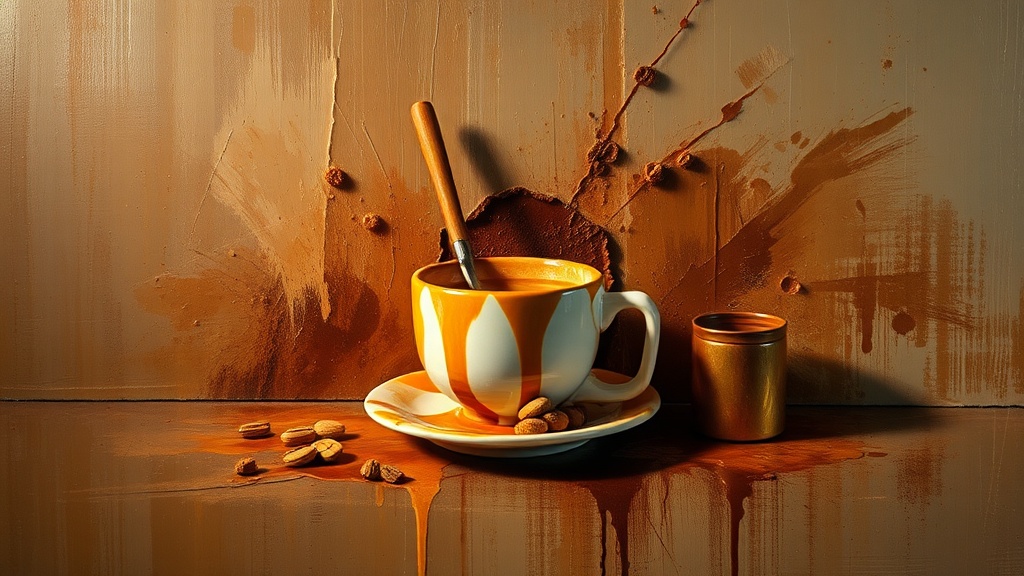
Painting with Coffee Stains and Espresso Tones

Have you ever wondered if that leftover cup of dark roast could actually become a medium for fine art instead of just a caffeine fix? This guide explores the technical application of coffee as a pigment, focusing on how to control its transparency, tonal depth, and organic texture. We'll look at the chemistry of coffee staining, the specific tools required for precision, and how to layer shades to create depth without making the paper look muddy or washed out.
Coffee is a natural pigment that behaves much like a watercolor, though its chemical makeup presents unique challenges for the artist. Unlike synthetic pigments, coffee relies on tannins to create color. These tannins react with the fibers of your paper, often resulting in a subtle, sepia-toned aesthetic that feels both vintage and organic. It's a beautiful way to add warmth to your work, but you can't just pour it on a page and expect a masterpiece.
What Kind of Coffee Works Best for Painting?
Strong, dark-roast coffee provides the most consistent and deep pigment for artistic use. While any coffee can technically work, the concentration of caffeine and tannins varies wildly between blends. A light roast might produce a pale, yellowish tint, but if you want those deep, espresso-rich shadows, you need something with more substance.
I've experimented with several types, and here is what I've found regarding the tonal range:
- Instant Coffee: This is your best friend for high-intensity color. Because it's a powder, you can control the exact saturation by mixing it with a tiny amount of water. It creates a very concentrated "ink" that dries quickly.
- Brewed Coffee: Great for large-scale washes. It's less predictable than instant, but it's much easier to use for broad, atmospheric backgrounds.
- Espresso: This offers the highest level of pigment density. It's thick, dark, and stays true to its color even when diluted.
- Decaf Coffee: Honestly? It's a bit of a letdown. It lacks the chemical "punch" of regular coffee and tends to look a bit more washed out once dry.
If you're looking for a more permanent, professional-grade pigment, you might want to look into tannins research to understand how these organic compounds interact with different surfaces. Understanding the science helps you predict how your "paint" will behave once it hits the paper.
How Do I Prevent Coffee Art from Looking Muddy?
Layering is the primary way to build depth without losing the clarity of your art. The secret is to work from light to dark and to allow each layer to dry completely before adding the next. If you add wet coffee to a wet wash, you'll lose all control over the edges, and the result will look like a messy spill rather than an intentional piece of art.
To keep your work clean, follow these technical steps:
- Start with a light wash: Use a highly diluted version of your coffee to lay down the base shapes.
- Dry thoroughly: Use a hair dryer on a low, cool setting if you're impatient. I know, it's tempting to keep working while it's damp, but don't do it.
- Build mid-tones: Once the base is dry, use a slightly more concentrated mixture to add shadows.
- Add high-contrast accents: Use your darkest, most concentrated espresso-style "ink" for the final details and deep shadows.
A common mistake is using too much water at once. If the paper becomes oversaturated, the coffee will bleed into the fibers uncontrollably. It's often better to do five thin layers than one thick, heavy layer. This approach also reminds me of the precision needed when reviving dried watercolors—it's all about the control of moisture.
Note: If you're working with heavy paper, make sure it's high-quality watercolor paper. Thin sketchbook paper will buckle and warp under the weight of the coffee.
What Supplies Do I Need for Coffee Painting?
You don't need an expensive kit to start, but certain tools will make the process much smoother. You can use almost any brush, but the type of paper you choose is actually the most important variable in the entire process.
| Tool Type | Recommended Option | Why It Works |
|---|---|---|
| Paper | 140lb (300gsm) Cold Press Watercolor Paper | Handles heavy liquid without warping. |
| Brushes | Synthetic Round Brushes (Size 4 or 6) | Holds a good amount of liquid for washes. |
| Pigment | High-quality Instant Coffee (like Starbucks Via) | Provides intense, predictable color. |
| Mixing Vessel | Small glass or ceramic ramekinsAllows for multiple concentrations. |
When choosing your paper, look for brands like Winsor & Newton or Arches if you want to ensure your work survives the drying process without significant buckling. Even though coffee is "cheap," using cheap paper will frustrate you. You want a surface that can absorb the tannins without tearing or pilling.
I also suggest keeping a small palette of different coffee concentrations ready. You might want a "light" cup for your sky-tones and a "dark" cup for your deep shadows. This is similar to how you'd manage a studio when building a natural indigo dye studio—consistency in your medium is everything.
Managing Texture and Spills
Sometimes, the best part of coffee painting is the "accident." If you want to create texture, try the salt method. While the coffee is still wet on the paper, sprinkle a tiny bit of sea salt over the area. The salt will pull the pigment toward it, creating a beautiful, mottled effect. This works incredibly well for creating the appearance of stone or weathered wood.
Another way to add texture is through "splatter" techniques. Dip a stiff-bristled brush into a highly concentrated coffee mixture and flick it at your paper. This creates organic, irregular dots that look much more natural than a controlled brushstroke. It adds a sense of movement and grit to the piece.
One thing to keep in mind: coffee is organic. Over a long period of time, it can change color as it oxidizes. This isn't necessarily a bad thing—it adds to the "antique" look—but be aware that your final piece might look slightly different after a few weeks of exposure to air. If you want to preserve the exact tone, you might consider a light matte spray fixative once the piece is completely dry.
Don't be afraid to experiment with different temperatures. A warm coffee might react differently with the paper than a cold one, especially regarding how quickly the water evaporates. If you're looking for a more controlled, ink-like finish, use the instant coffee method. If you want a dreamy, ethereal wash, go with a brewed coffee. The choice is yours, but always test a small scrap of paper first to see how your specific blend behaves.